Explore the Map
Rocha dos Namorados
38.4451° N, -7.4755° E
About
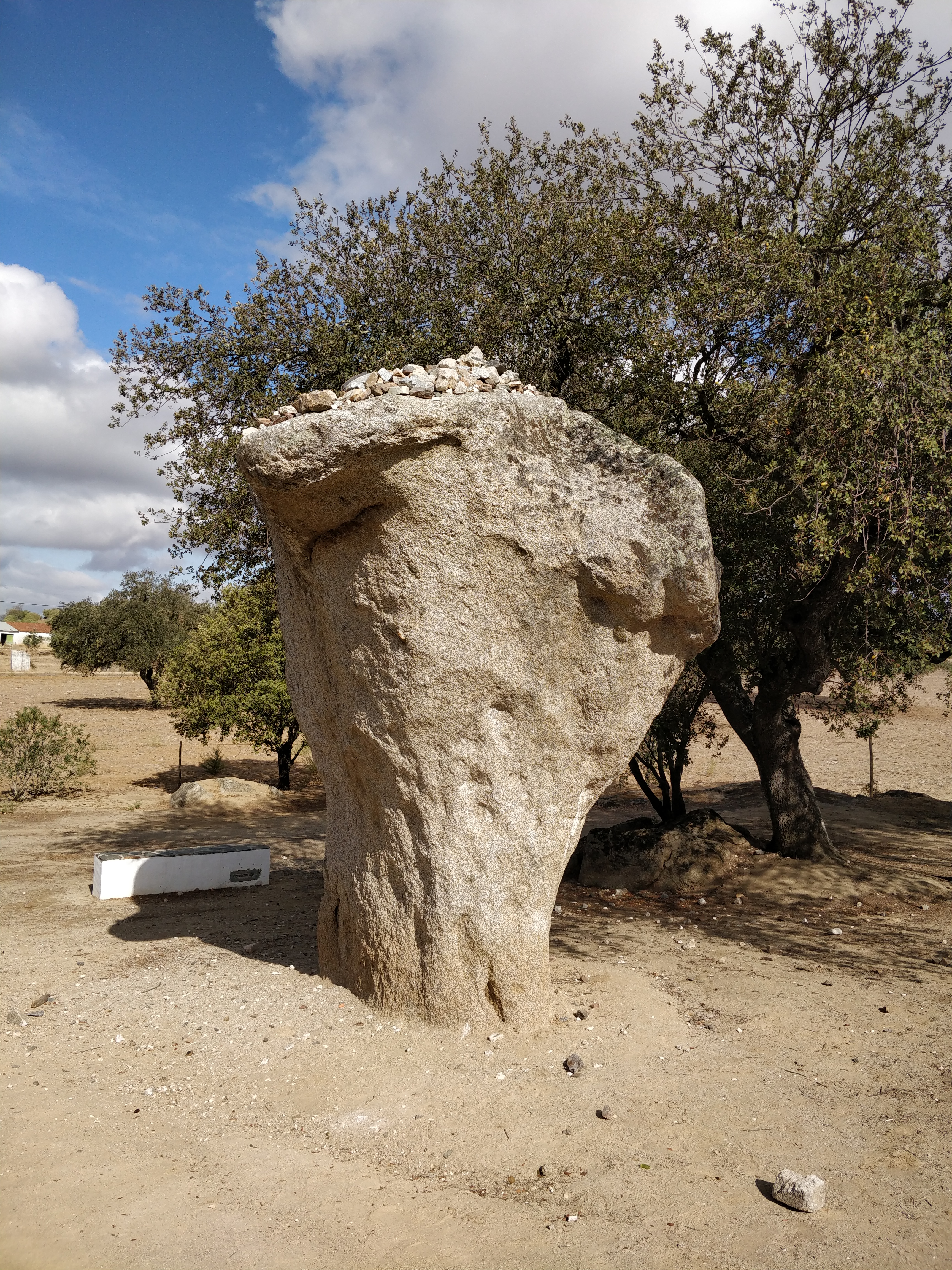
The Rocha dos Namorados, located in the Alentejo region of Portugal, is a prominent granite stone resembling a mushroom that may be naturally occurring but features megalithic engravings. It has been historically associated with ancient fertility rites, indicating its importance in cultural and religious practices since the Neolithic period. The stone stands over two meters high with a circumference of approximately seven meters. Over time, it has been integrated into local folklore, with traditions involving young women consulting the stone to predict marriage prospects on Easter Monday. Such practices highlight the stone's enduring significance as a cultural and ritualistic symbol in the region, bridging ancient pagan beliefs with ongoing local customs.
Gallery
Explore photographs of ancient structures, artifacts, and archaeological excavations
Historical Timeline
Journey through time and discover key events in this site's history
Neolithic Ritual Use
8000 BCE - 3000 BCE
Archaeological Features
Unique architectural and cultural elements found at this historical site
Religious and Ritual Structures
Frequently Asked Questions
Plan Your Visit
Tours, travel arrangements, and practical information
More Sites in Portugal
Roman ruins of Casais Velhos
Roman villa and baths, Cascais region, 2nd–5th centuries
Roman villa of Santo André de Almoçageme
Roman villa in Sintra, Portugal (3rd–5th centuries)
Ribat of Arrifana
The Ribat of Arrifana is the archeological site of the remains of a Muslim fortification (ribat) situated in Arrifana, Aljezur municipality, in the Faro District of the Algarve region, Portugal.
Roman Dam of Pego da Moura
Roman buttress dam in Setúbal District, Portugal
Roman villa of Quinta da Bolacha
The Roman villa of Quinta da Bolacha (Portuguese: Vila Romana de Quinta da Bolacha) is a Roman villa in the civil parish of Falagueira-Venda Nova, mun
Roman ruins of Cerro da Vila
Roman coastal villa and baths, Algarve, Portugal