Explore the Map
Ploutonion at Hierapolis
37.9268° N, 29.1268° E
About
The Ploutonion at Hierapolis (Ancient Greek: Πλουτώνειον Ploutōneion, lit "Place of Pluto"; Latin: Plutonium) or Pluto's Gate was a ploutonion (a religious site dedicated to the god Pluto) in the ancient city of Hierapolis near Pamukkale in modern Turkey's Denizli Province. The site was discovered in 1965 by Italian archaeologists, who published reports on their excavations throughout the decade. Following the studies carried out on site in 1998, a geologist of the Italian National Research Council, Luigi Piccardi, recognized that the origin of both the Ploutonion and of the nearby Apollo's Oracle of Hierapolis was linked to the existence of the surface trace of a seismic fault, on which both sanctuaries were purposely built and which was revered as Gateway of Hades. In 2013, it was further explored by Italian archaeologists led by Francesco D'Andria, a professor of archaeology at the University of Salento. As part of a restoration project, a replica of the marble statue of Hades and Cerberus has been restored to its original place. The statue is known to have been there in ancient times.
Historical Timeline
Journey through time and discover key events in this site's history
City founded
c. 190 BC
Site functional until
4th century AD
Destruction by earthquakes
6th century AD
Site discovered by archaeologists
1965
Geological study linking fault to sanctuary
1998
Modern exploration led by D'Andria
2013
Archaeological Features
Unique architectural and cultural elements found at this historical site
Public and Civic Structures
Religious and Ritual Structures
Artistic and Decorative Features
Environmental and Natural Features
Frequently Asked Questions
Plan Your Visit
Tours, travel arrangements, and practical information

More Sites in Turkey
Euromus
Ancient Carian city and temple, 6th century BCE
Carchemish
Ancient capital ruins on the Euphrates, Turkey–Syria border
Çadır Höyük
Artificial mound settlement in Yozgat Province, Turkey
Lysinia
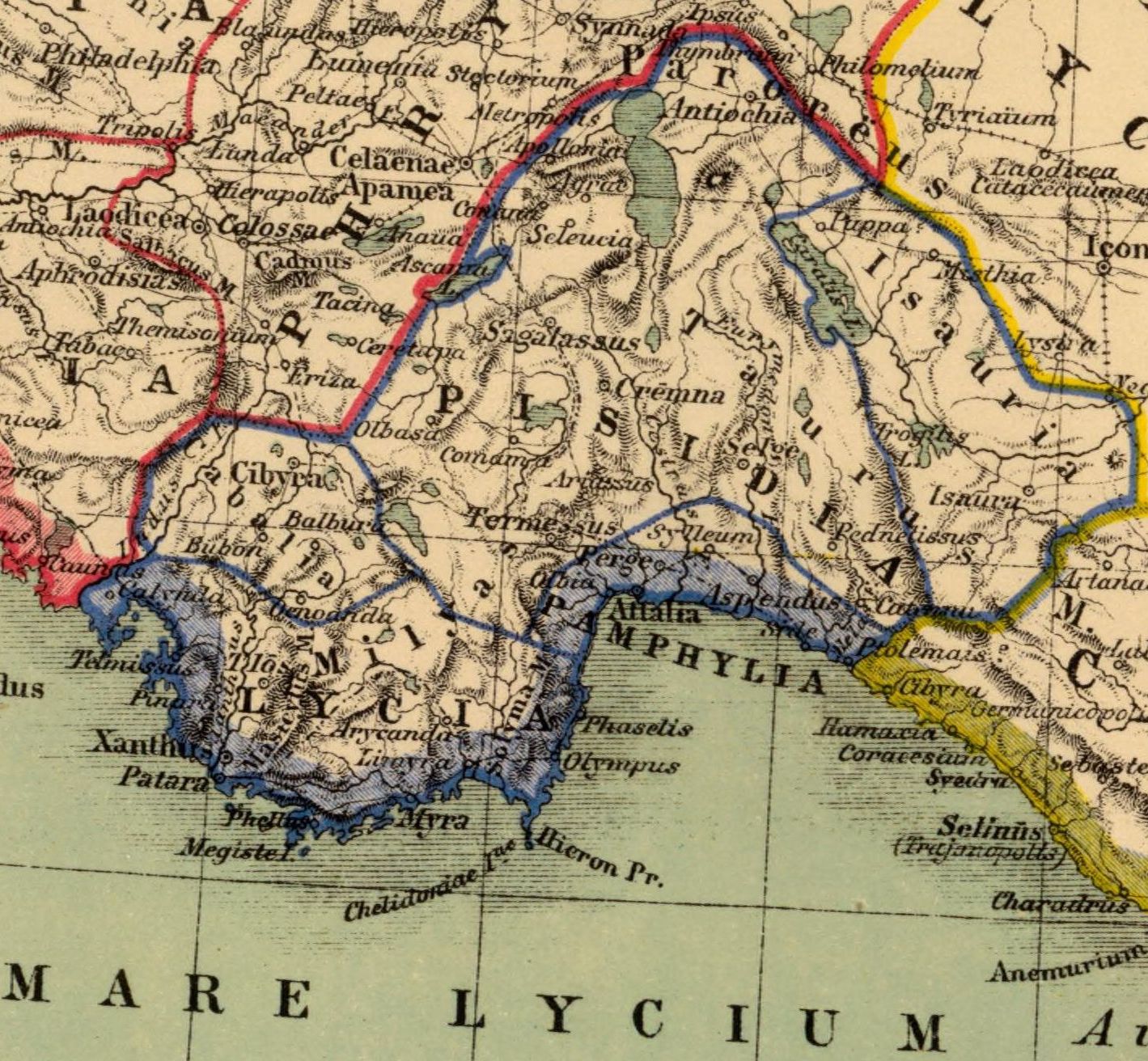
Ancient town in Pisidia, later Pamphylia.
Blaundus
Hellenistic city ruins in western Anatolia, Turkey
Larissa Phrikonis
Aeolian city ruins in western Turkey