Lu Xun Park
Time Periods
Paleolithic
Mesolithic
Neolithic
Chalcolithic
Bronze Age
Iron Age
Classical Period
Post-Classical Period
Early Modern Period
Industrial Period
Contemporary Period
Time Periods
Paleolithic
Mesolithic
Neolithic
Chalcolithic
Bronze Age
Iron Age
Classical Period
Post-Classical Period
Early Modern Period
Industrial Period
Contemporary Period
Location
About
Lu Xun Park, formerly Hongkou (Hongkew) Park, is a municipal park in Hongkou District of Shanghai, China. It is located on 146 East Jiangwan Road, right behind Hongkou Football Stadium. It is bounded by Guangzhong Road to the north, Ouyang Road to the northeast, Tian'ai Road to the southeast, Tian'ai Branch Road to the south, and East Jiangwan Road to the west. The park is named after the Chinese writer Lu Xun, who lived nearby in the last years of his life, and is the location of the tomb of Lu Xun and the Lu Xun Museum. In 1932, Korean nationalist Yun Bong-gil detonated a bomb at the park, killing or injuring several high-ranking figures of the Imperial Japanese military during a celebration of Emperor Hirohito's birthday. Lu Xun Park is just north of Duolun Road, a historic street that is now a car-free zone. It is also located near Lu Xun's former residence, a three-story Japanese-style home where the author lived from 1933 until his death in 1936.
Plan Your Visit
Details
- Country
- China
- Source
- Wikipedia
More Sites in China
Baiheliang Underwater Museum
Explore this archaeological site.
Mausoleum of the First Qin Emperor
Explore this archaeological site.
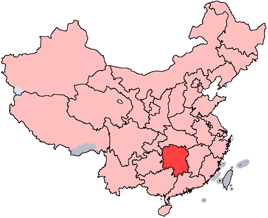
Tanheli
Bronze Age cultural center in Hunan
Xinglongwa culture
Explore this archaeological site.
Shangjing Longquanfu
Explore this archaeological site.
Liye Ancient City
Ancient city with Qin dynasty artifacts