Explore the Map
Cranon
39.5005° N, 22.3025° E
About
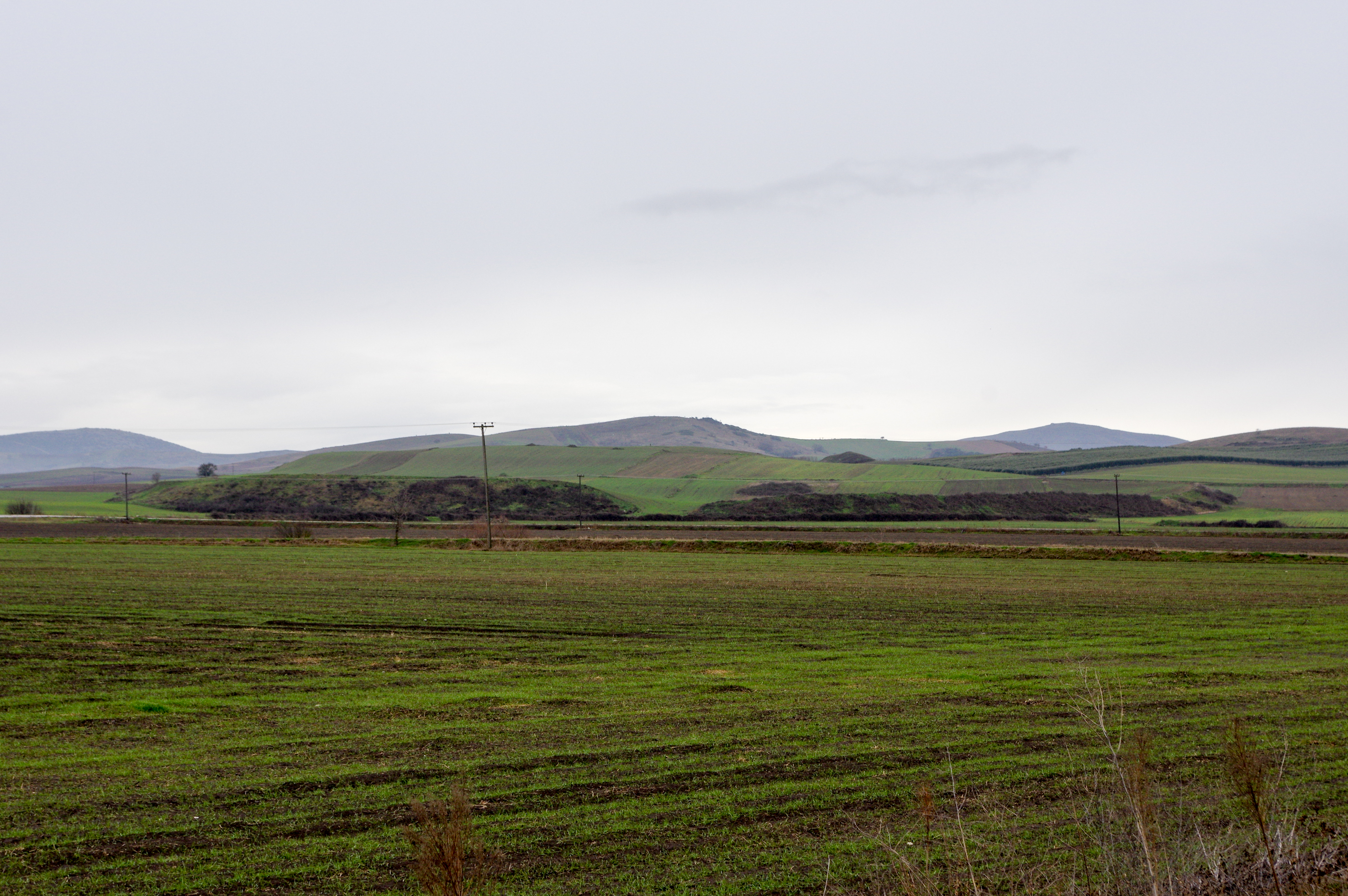
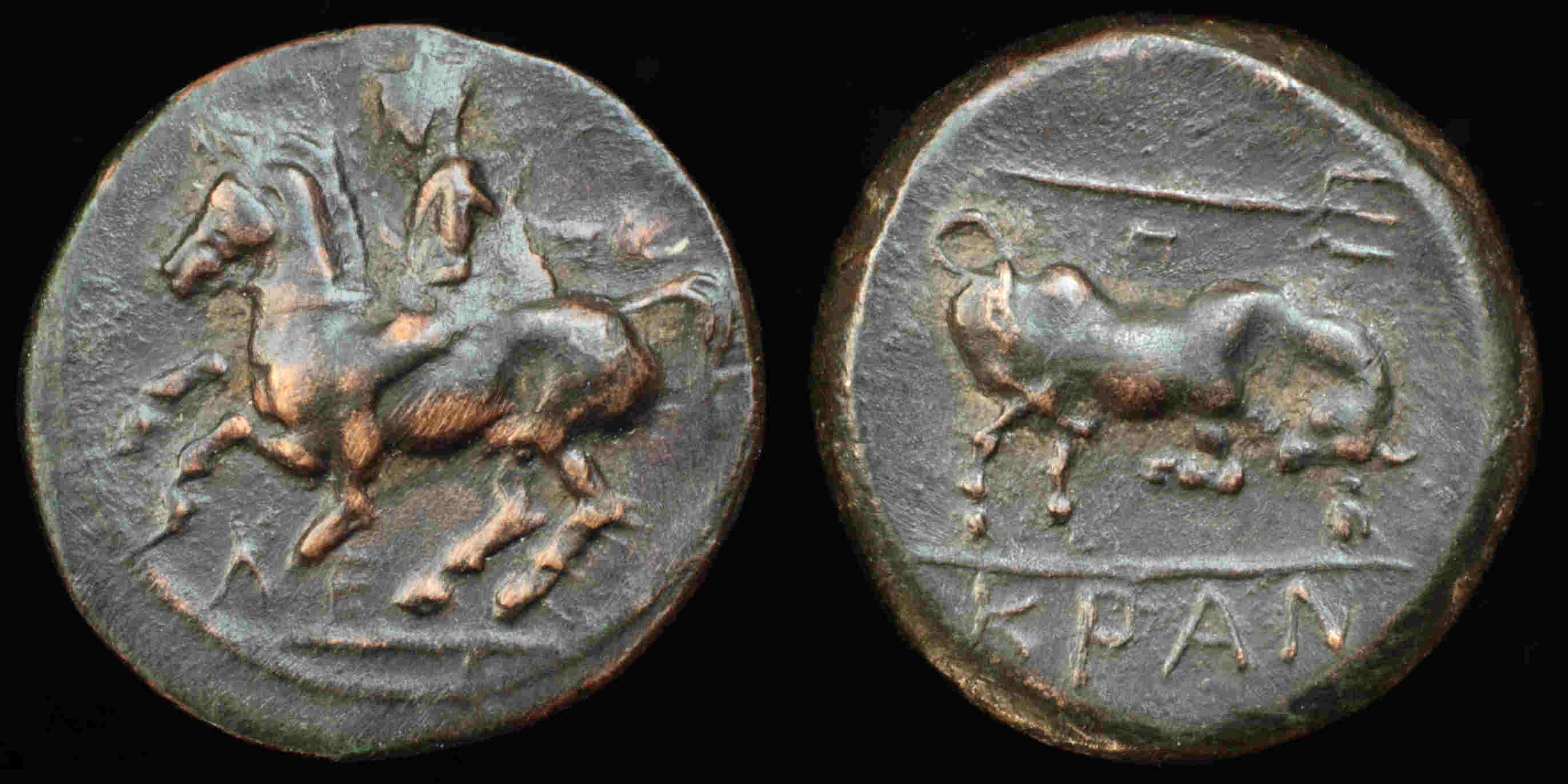
Cranon, known in antiquity as Crannon, was a significant town and city-state in ancient Thessaly, Greece. Located southwest of Larissa, it played an important role in various historical conflicts and alliances, such as the Peloponnesian War and the Lamian War. The town was fortified and likely featured various public and religious structures, including temples dedicated to Athena, Aesclepius, Apollo, Poseidon, and Zeus. It was also known for its coinage, producing silver and bronze coins in the 5th and 4th centuries BCE. The city was home to the influential Scopadae family and hosted the poet Simonides of Ceos. Cranon's history reflects its strategic importance in Thessaly and its interactions with notable figures and powers of the era, including the Macedonian rulers and the Seleucid Empire.
Gallery
Explore photographs of ancient structures, artifacts, and archaeological excavations
Historical Timeline
Journey through time and discover key events in this site's history
Crauxidas wins horse race
648 BCE
Scopadae prominent family
6th century BCE
Crannonians assist Athenians
431 BCE
Crannonians ally with Boeotians
394 BCE
Battle of Crannon
338 BCE
Antiochus III captures Crannon
191 BCE
Archaeological Features
Unique architectural and cultural elements found at this historical site
Defensive Structures
Public and Civic Structures
Religious and Ritual Structures
Artistic and Decorative Features
Domestic and Habitation Structures
Frequently Asked Questions
Plan Your Visit
Tours, travel arrangements, and practical information
More Sites in Greece
Lower Larymna
Ruins of ancient Boeotian port city
Dodona
Ancient Hellenic oracle in Epirus, northwestern Greece
Philippi
Roman and early-Christian city in Greek Macedonia
Lappa (Crete)
Ancient Greek city in Crete
Nicopolis
Roman city and monumental complex, 1st century BC
Temple of Sangri
Late Archaic Ionic temple, Naxos (6th century BCE)