Cádiz
Time Periods
Paleolithic
Mesolithic
Neolithic
Chalcolithic
Bronze Age
Iron Age
Classical Period
Post-Classical Period
Early Modern Period
Industrial Period
Contemporary Period
Time Periods
Paleolithic
Mesolithic
Neolithic
Chalcolithic
Bronze Age
Iron Age
Classical Period
Post-Classical Period
Early Modern Period
Industrial Period
Contemporary Period
Location
About
Cádiz ( kə-DIZ, US also KAY-diz, KA(H)D-iz, Spanish: [ˈkaðiθ]) is a city in Spain and the capital of the Province of Cádiz, in the autonomous community of Andalusia. It is located in the southwest of the Iberian Peninsula off the Atlantic Ocean separated from neighbouring San Fernando by a narrow isthmus. Cádiz, one of the oldest continuously inhabited cities in Western Europe, was founded by the Phoenicians as a trading post. In the 18th century, the Port in the Bay of Cádiz consolidated as the main harbour of mainland Spain, enjoying the virtual monopoly of trade with the Americas until 1778. It is also the site of the University of Cádiz. Situated on a narrow slice of land surrounded by the sea‚ Cádiz is, in most respects, a typical Andalusian city with well-preserved historical landmarks. The older part of Cádiz, within the remnants of the city walls, is commonly referred to as the Old Town (Spanish: Casco Antiguo), and represents a large area of the total size of the city. It is characterized by the antiquity of its various quarters (barrios), among them El Pópulo, La Viña, and Santa María, which present a marked contrast to the newer areas of town. While the Old City's street plan consists of narrow winding alleys connecting large plazas, newer areas of Cádiz typically have wide avenues and more modern buildings. The city is dotted with parks where exotic plants flourish, including giant trees supposedly brought to the Iberian Peninsula from the New World. This includes the historic Parque Genovés.
Plan Your Visit
Details
- Country
- Spain
- Source
- Wikipedia
More Sites in Spain
Carteia
Explore this archaeological site.
Cave of Altamira and Paleolithic Cave Art of Northern Spain
Explore this archaeological site.
Ruins of Talamanca
Explore this archaeological site.
Cieza, Murcia
Archaeological site with multi-period remains.
Ercavica
Explore this archaeological site.
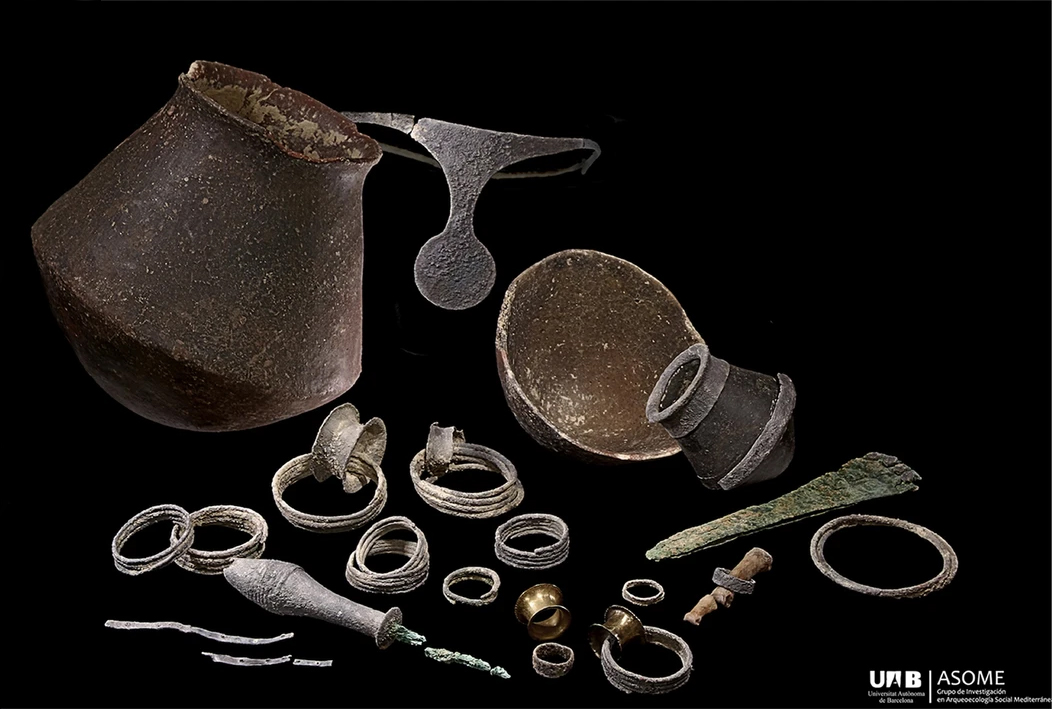
La Almoloya
Bronze Age site with rich graves