Explore the Map
Canopus, Egypt
31.3000° N, 30.0833° E
About
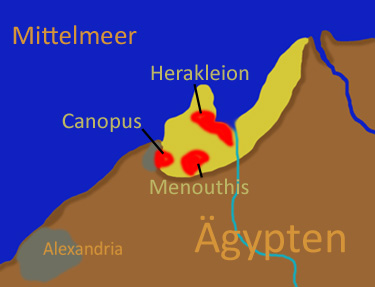
Canopus was an ancient Egyptian coastal town located in the Nile Delta, near present-day Alexandria. It served as a significant port for Greek trade before Alexandria's establishment. The town is known for its religious structures, including a temple dedicated to the god Serapis and another to Osiris, built during the reign of Ptolemy III Euergetes. Canopus gained fame for an honorific decree passed by a priestly assembly in 239 BCE, known as the Decree of Canopus, which helped in understanding ancient Egyptian language. Over time, natural disasters such as earthquakes and tsunamis, along with rising sea levels, led to the collapse of the eastern suburbs, submerging them underwater. The site, now partially beneath Abu Qir Bay, remains a key focus for underwater archaeological studies.
Gallery
Explore photographs of ancient structures, artifacts, and archaeological excavations


Historical Timeline
Journey through time and discover key events in this site's history
Foundation as ancient port
6th century BCE
Temple to Osiris
3rd century BCE
Decree of Canopus
239 BCE
Eastern suburbs collapse
2nd century BCE
Archaeological Features
Unique architectural and cultural elements found at this historical site
Public and Civic Structures
Religious and Ritual Structures
Domestic and Habitation Structures
Transportation and Communication Structures
Frequently Asked Questions
Plan Your Visit
Tours, travel arrangements, and practical information


More Sites in Egypt
Medinet Madi
Greco-Roman town with Middle Kingdom temple
Bubastis
Ancient Egyptian city with Bastet temple

Leontopolis (Heliopolis)
Ancient city with fortifications and a temple.
Thinis
Ancient Upper Egypt's undiscovered capital city.
Gebelein
Archaeological site with mummies and temple ruins
Taposiris Magna
Ancient city with temple and tombs