Explore the Map
Huanbei
36.1300° N, 114.3400° E
About
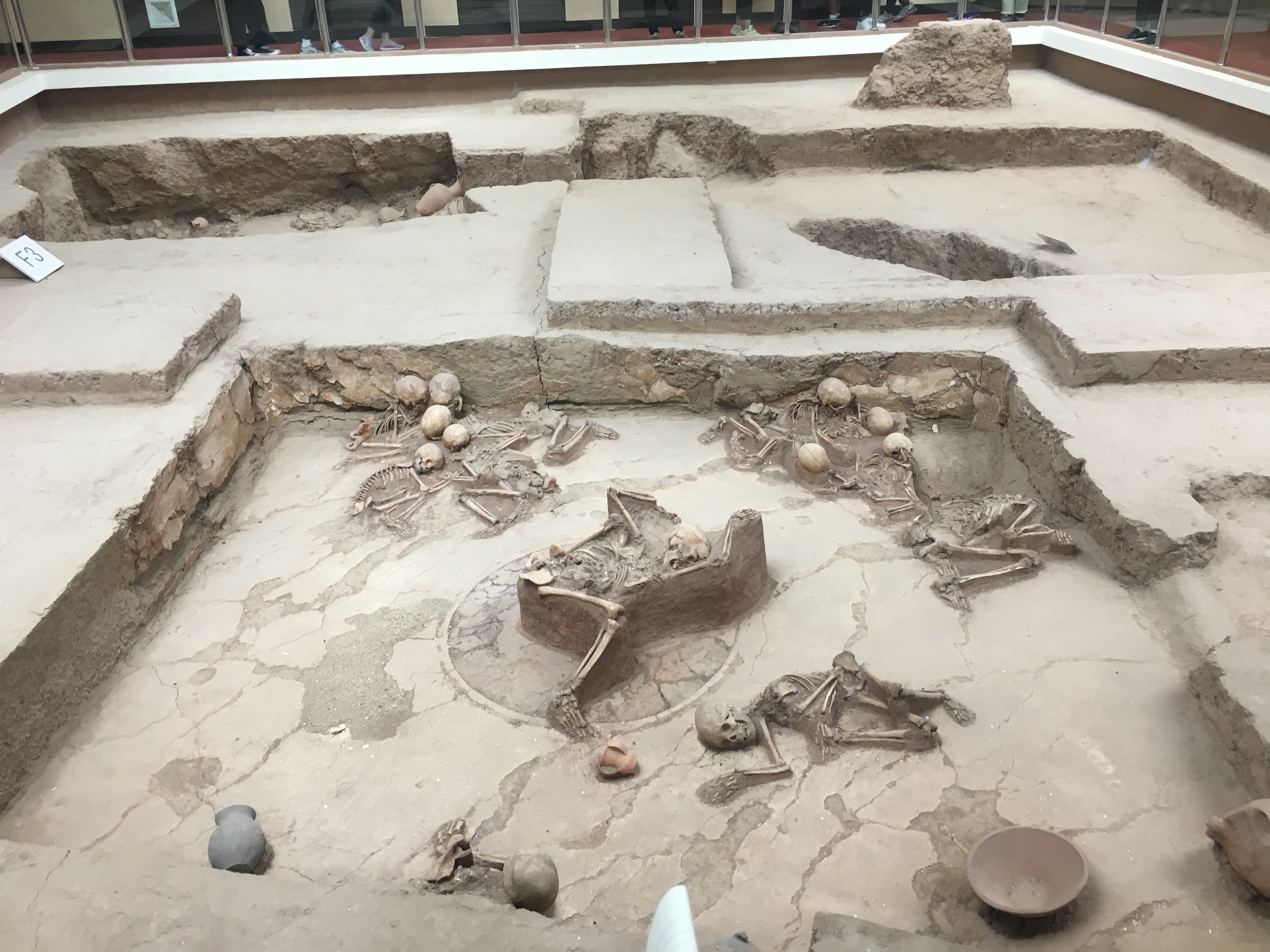
Huanbei, also known as Huayuanzhuang, is an archaeological site located on the northern outskirts of Anyang in Henan province, China. It is a Bronze Age city, discovered in 1999, featuring pounded earth walls that form an approximate square and enclose a vast area of 470 hectares. Within this area lies a significant palace-temple complex spanning 41 hectares. The city's architectural layout is oriented 13 degrees east of north. Huanbei represents a critical phase in the Middle Shang period, with its occupation dating back to around 1300 BCE, lasting approximately 50 years. The city was eventually destroyed by fire around 1250 BCE, closely preceding the construction of Yinxu, the site of the earliest Chinese written records. Despite its partial location under Anyang's airport, limiting excavation efforts, Huanbei provides valuable insights into the urban planning, defensive strategies, and religious practices of the Shang dynasty.
Historical Timeline
Journey through time and discover key events in this site's history
Huanbei City Occupation
1300 BCE
Destruction of Huanbei City
1250 BCE
Archaeological Features
Unique architectural and cultural elements found at this historical site
Defensive Structures
Religious and Ritual Structures
Domestic and Habitation Structures
Frequently Asked Questions
Plan Your Visit
Tours, travel arrangements, and practical information
More Sites in China
Lajia
Bronze Age site in Yellow River region
Capital Cities and Tombs of the Ancient Koguryo Kingdom
Goguryeo fortress-cities and tombs, 1st century BCE–7th century CE
Ye (Hebei)
Ancient Chinese city, significant historical capital
Lingyin Temple
Chan Buddhist temple in Hangzhou, China
Laosicheng
Largest, best-preserved ancient Tusi city
Shangjing Longquanfu
Balhae capital city ruins, 8th–10th centuries