Schöningen spears
Time Periods
Paleolithic
Mesolithic
Neolithic
Chalcolithic
Bronze Age
Iron Age
Classical Period
Post-Classical Period
Early Modern Period
Industrial Period
Contemporary Period
Time Periods
Paleolithic
Mesolithic
Neolithic
Chalcolithic
Bronze Age
Iron Age
Classical Period
Post-Classical Period
Early Modern Period
Industrial Period
Contemporary Period
Location
About
The Schöningen spears are a set of ten wooden weapons from the Palaeolithic Age that were excavated between 1994 and 1999 from the 'Spear Horizon' in the open-cast lignite mine in Schöningen, Helmstedt district, Germany. The spears are among the oldest hunting weapons discovered and were found together with animal bones and stone and bone tools. Being used by the oldest known group of hunters, they provided unique proof that early human ancestors were much closer to modern humans in both complex social structure and technical ability than thought before. The excavations took place under the management of Hartmut Thieme of the Lower Saxony State Service for Cultural Heritage (NLD). The age of the spears, originally assessed as being between 380,000 and 400,000 years old, was estimated from their stratigraphic position, 'sandwiched between deposits of the Elsterian and Saalian glaciations, and situated within a well-studied sedimentary sequence.' However, more recently, thermoluminescence dating of heated flints in a deposit beneath that which contained the spears date the spears to between 337,000 and 300,000 years old, placing them at the end of the interglacial Marine Isotope Stage 9. All studies place the spears in the Holstein interglacial, which is correlated either to the marine isotope stages, MIS 11 (424–374 thousand years ago) or to MIS 9 (337–300 thousand years ago.) The Schöningen spears are the oldest complete wooden weapons, and may predate the fragmented Clacton spear point in which case they would be the oldest known worked wooden implements. To date, hominin remains have not been discovered from the Schöningen Pleistocene deposits, and therefore the species that crafted and used the wooden weapons and other tools at Schöningen remains uncertain. The most likely candidates are Homo heidelbergensis or early Neanderthals. The spears provide evidence of the importance of wood as a material for Palaeolithic tools. The spears were found associated with numerous bones of the extinct horse species Equus mosbachensis which display cut marks indicative of butchery.
Plan Your Visit
Details
- Country
- Germany
- Source
- Wikipedia
More Sites in Germany
Menosgada
Celtic oppidum with defensive structures
Breitenbach (archaeological site)
Large Aurignacian and Neolithic settlement site
Niederstotzingen
Prehistoric carvings and Roman structures
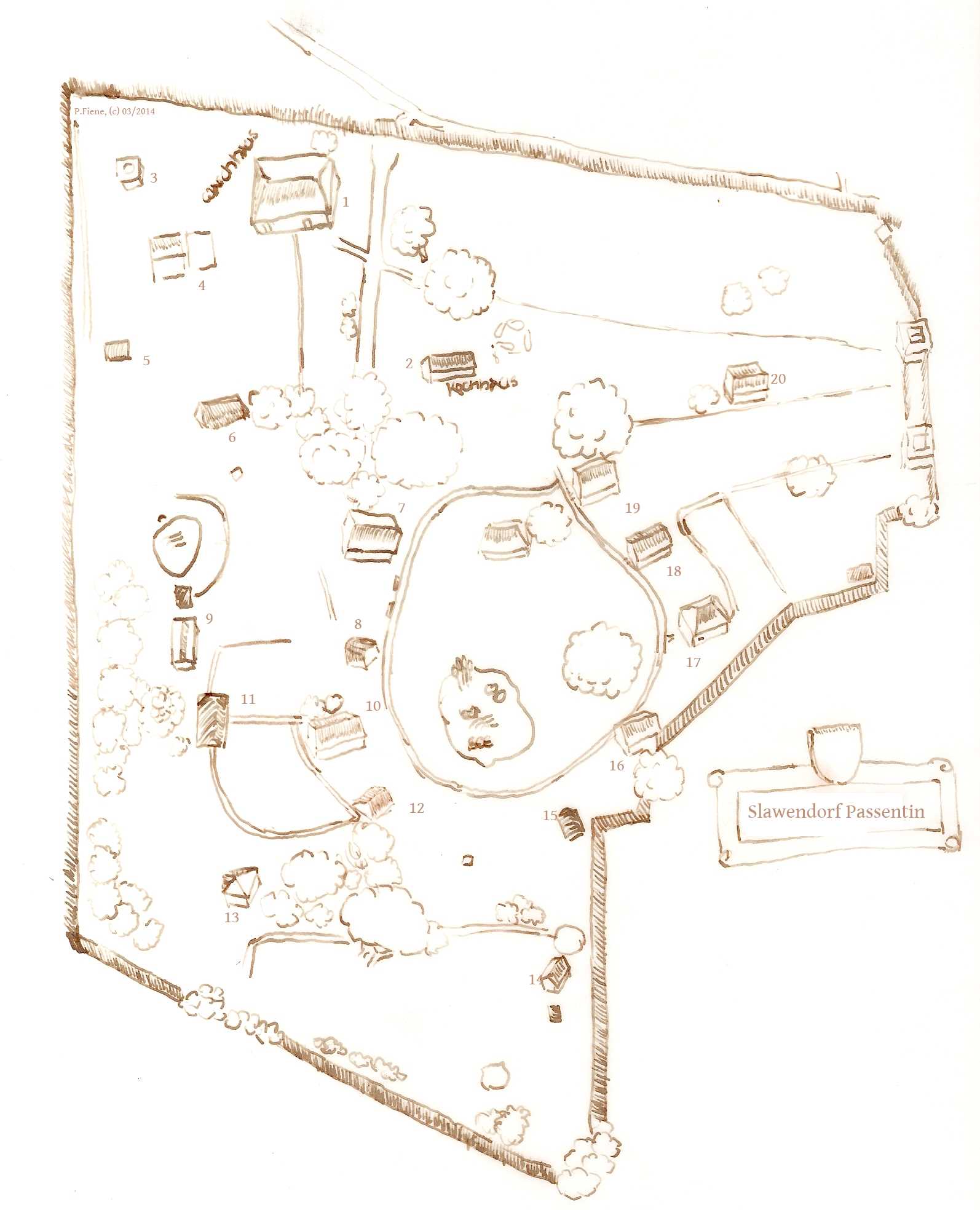
Slavic Village Passentin
Reconstructed Early Middle Ages Slavic village
Teufelsrutsch
Wooded knoll with ancient mine and stronghold
Oppidum of Manching
Large Iron Age Celtic settlement in Bavaria.